
History
Robert Carter 1807–1889
Robert Carter was a Scottish-born bookseller, publisher, and Presbyterian elder whose New York firm became an important source of religious books for nineteenth-century American readers. From a small shop opened in 1834, he built a publishing house that brought British theology and devotional writing into American homes, churches, and seminaries. His Christian faith shaped his choice of books, his conduct in business, and the work to which he gave much of his time and income.
The name Robert Carter & Brothers followed when his younger brothers Walter and Peter became partners in 1848. The house published biblical commentaries and works of Reformed theology alongside history, biography, science, fiction, and books for children. Carter’s life connects these apparently different parts of the list: he had been a teacher before he became a bookseller, and remained concerned with what readers learned from the books he placed in their hands.
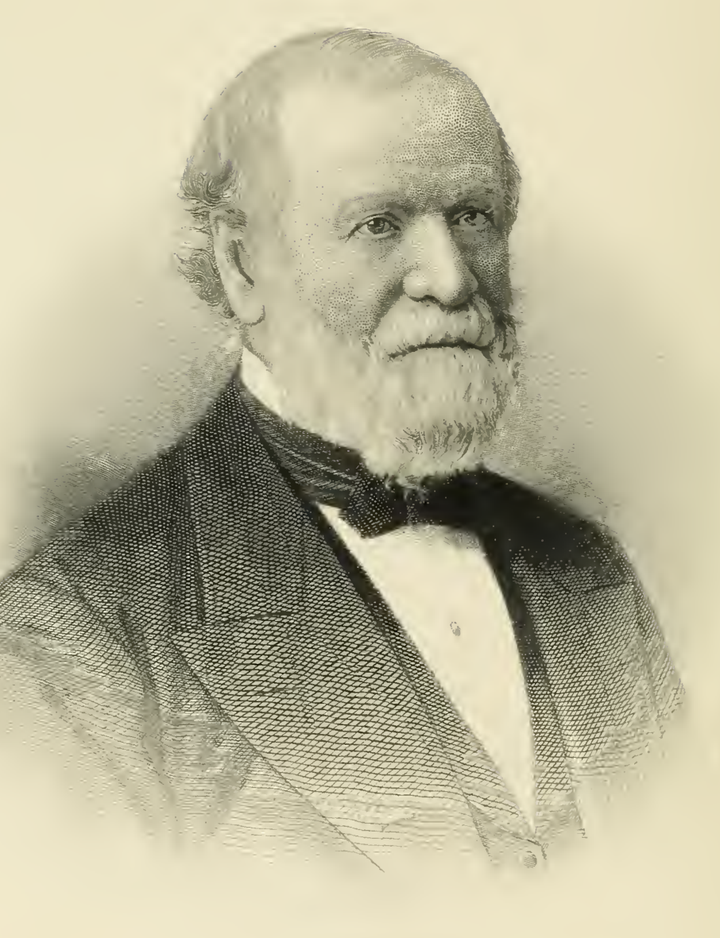
Source: Annie Carter Cochran’s biography
Childhood and education in Scotland
Carter was born in November 1807 at Earlston, in Berwickshire, the son of Thomas Carter and Agnes Ewing. His father was a weaver, and the family’s cottage contained six looms. Robert left regular schooling at nine and a half to work beside him. Reading continued wherever he could find time for it. He fixed a board beside his loom to hold a book open while he worked, borrowed volumes from neighbours, and saved small sums to buy books at the village fairs. His early reading included the Bible, Bunyan, Josephus, and accounts of Scottish history.
His cousin Thomas, a student at Edinburgh, taught him Latin and later Greek. These lessons opened a path from weaving to teaching. At fifteen Carter took charge of a school in Selkirk for a winter; he subsequently taught near Earlston and opened a school in his native village. In 1828 he became an assistant to the rector of the grammar school at Peebles. Two years later he went to Edinburgh to attend university classes, where the classical scholar James Pillans became an influential teacher and supporter.
Faith was already a personal commitment. At fourteen Carter sought admission to communion in Earlston’s Secession Church. His later recollections describe the difference between attending worship out of habit and acknowledging Christ for himself. The family’s daily prayers, psalm singing, and instruction in the Shorter Catechism furnished the pattern he would carry into his own household.
His religious affiliation also affected his prospects. While studying in Edinburgh, he applied for a parish school at Smailholm and was discouraged from proceeding because he belonged to a dissenting church. He resolved to seek work in America, where he hoped to establish himself and prepare the way for his parents and siblings.
A Scottish teacher in New York
Carter sailed from Greenock aboard the Francis in April 1831 and landed in New York on 16 May. During the six-week voyage he helped lead Sunday worship for the passengers, reading a lecture on Acts and joining in prayer and psalm singing. He arrived without a personal acquaintance in the city, but with letters of introduction from Scotland.
One of those letters brought him to John Griscom, the Quaker educator, who welcomed him and introduced him to people able to help him find work. Charles Anthon of Columbia examined Carter in Latin and Greek and gave him a teaching position in the college’s grammar school. Carter then moved to the New York High School and, after its closure, opened a school with a colleague at Broadway and Grand Street. Among his pupils was Schuyler Colfax, later vice-president of the United States. Within a year of arriving, Carter had saved enough to pay for his family’s passage to America.
On his first Sunday in New York he attended the Scotch Presbyterian Church in Cedar Street, where John McElroy was minister. It remained his church throughout his life. He soon began teaching in its Sunday school, became superintendent in 1837, and served in that office for more than thirty years. In 1847 he became a ruling elder, taking responsibility with the other elders for the congregation’s spiritual oversight.
Marriage and the beginning of the bookshop
Through the Sunday school Carter met Jane Thomson, the daughter of Samuel Thomson, an elder of the same church. They married on 18 March 1834. Jane’s mother had suggested that Carter’s knowledge and love of books might make bookselling a more promising occupation than teaching. He acted on the suggestion before the wedding, finding premises at Canal and Laurens Streets and buying the stock of an insolvent bookseller on Cortlandt Street with his savings of six hundred dollars.
The shop opened on 1 April. Its first customer bought a Bible. Carter, still unfamiliar with his stock, charged too little and lost money on the sale; he nevertheless liked to remember that a Bible was the first book he sold. The business soon earned more than his school had done, and he moved to larger premises at Canal and Mercer Streets.
Jane was closely involved in the decisions and commitments of their life together. Their home was filled with books, and Carter continued to help his children with Latin and Greek as they progressed through school and college. They also welcomed ministers, missionaries, and visiting friends. The death of their first child, Samuel, before his fourth birthday was a lasting grief, remembered in Carter’s diary and in the family’s account of his life.
Becoming a Christian publisher
In 1836 James Lenox encouraged Carter to publish William Symington’s work on the atonement of Christ and bought one hundred copies, chiefly for students at Princeton Seminary. Other New York booksellers warned that the subject was too dry for American readers. The first edition sold, followed by another fifteen hundred copies, and the book remained on Carter’s catalogue for the rest of his life.
Carter found another important opportunity during a visit to Europe in 1841. On the homeward voyage he read Merle d’Aubigné’s History of the Reformation and decided to publish it in America. Competition from a Philadelphia edition led him to offer three volumes for one dollar. He later recalled that the presses ran day and night, while the profit on thirty thousand sets amounted to only two cents a set. The wider readership helped bring customers to his other books.
He also reduced the price of substantial reference works. After buying the stereotype plates of Thomas Hartwell Horne’s Introduction for $3,300, he offered the work for $3.50 rather than the earlier price of $12. His ventures included Chalmers’s lectures on Romans, Matthew Henry’s commentary, Poole’s Annotations, and a shared edition of Turretin’s Latin works. These were books intended for sustained study, made available to readers who might otherwise have found them too expensive.
Selection occupied much of his time. Carter read manuscripts and books late into the evening, and estimated that he rejected about five volumes for every one he accepted. Mrs J. F. Sheafe, James Lenox’s sister, assisted him in the early years by reading prospective publications and giving her judgement of their merits. Commercial success mattered, but Carter also required a book to be something he believed true and useful.
Robert Carter and his brothers
Walter and Peter Carter became partners in 1848, and the firm took the name Robert Carter & Brothers. In the late 1840s the business moved from Canal Street to 285 Broadway. In 1856 Carter bought premises at Broadway and Spring Street, establishing the familiar imprint address of 530 Broadway.
The shop was a meeting place as well as a place of business. Ministers gathered there on Mondays to discuss books and church affairs; professors from Princeton and Union seminaries joined them. Carter’s friendships extended among Episcopal, Baptist, Methodist, Dutch Reformed, and other ministers. His daughter’s biography records a catalogue containing writers from those traditions as well as Presbyterians, and even authors who were Unitarian or Roman Catholic.
That breadth was consistent with his understanding of Christian service. His brother Peter recalled that he declined both a proposed defence of the exclusive divine right of Presbyterian government and a book attacking Arminian Methodism. Carter wanted his publishing to build up Christ’s Church. His convictions remained Presbyterian, but they did not require every author to share his denomination.
Authors also remembered his personal generosity. John R. Macduff described royalties supplemented for years by an annual gift of £25. Spurgeon wrote appreciatively of the firm’s friendship as well as its publishing of his sermons. Carter maintained close relations with Thomas Guthrie and James McCosh, whose works he introduced to American readers. Their letters preserve a connection between publisher and author that extended into hospitality, travel, bereavement, and prayer.
The catalogue grew beyond theology and devotion to include literature for families and children, history, biography, and science. Susan and Anna Warner, A.L.O.E., and the Mathews sisters belonged to a substantial list for younger readers. The Cabinet and Fireside libraries organised books into series intended to circulate through households. Libraries also catalogue the historic firm under the spelling “Robert Carter and Brothers.”
An elder in the wider church
Carter’s work for the church reached well beyond his congregation. He joined the Presbyterian Board of Foreign Missions in 1843 and its executive committee in 1847. His support included practical publishing work: the early Missionary Chronicle was produced under his direction, Jane prepared paste for its covers, and a younger brother delivered copies through the city. Missionaries were welcomed into the family home, and Carter helped those who needed rest, medical attention, or books.
In 1856 he became a manager of the American Bible Society and joined its publication committee. He was made one of its vice-presidents in 1878. Also in 1856, the General Assembly elected him a director of Princeton Theological Seminary. He served until his death and endowed three prizes for Old Testament studies, awarded annually from 1879. He was among the founders of the New York Sabbath Committee in 1857.
He attended the Presbyterian General Assembly as a commissioner seventeen times and took an active part in the movement to reunite the Old and New School churches. He served on the conference committee preparing reunion in 1869 and joined the celebrations at Pittsburgh that November. His daughter’s account records his efforts to reconcile disagreements while urging consideration for those who conscientiously opposed reunion. He also pressed the church to make systematic provision for sick and impoverished ministers and their families.
Faith in daily life
Carter understood money as a responsibility before God. He had long given a tenth of his income to Christian work. When his business could support more, he resolved to set aside for that work as much as he spent on his own family. Careful domestic spending thus increased what he could give. His preference for prompt payment and avoidance of financial entanglements was part of the same discipline, although he did borrow for a major purchase when a trusted supplier offered help.
The biography describes Carter and Jane spending many afternoons visiting people who were ill, bereaved, or in need. His assistance could mean money for rent or food, books for a minister, or quiet attendance at a sickbed. Prayer and material help belonged together in these visits.
Cochran also records his help to people escaping slavery. In one account, he contributed to the cost of a fugitive waiter’s journey towards Canada when the man faced recapture in New York. In another, a formerly enslaved man who had become a minister received a collection of commentaries and other books for his work. These recollections give concrete examples of the benevolence for which Carter’s contemporaries remembered him.
Final years and the closing of the firm
In 1884 Carter marked fifty years in business. Fellow publishers and booksellers sent a joint testimonial acknowledging his contribution to the American trade and the regard in which they held him. His fiftieth wedding anniversary fell in the same spring. Jane died in July 1887, after more than fifty-three years of marriage.
Carter’s health declined, but he continued to take an interest in his family, friends, business, and church. During his final illness he asked for family prayers to be held in his room and for the Bible to be read to him. Among his last instructions were reminders about support for his sisters, gifts for his grandchildren, and the firm’s annual contribution to foreign missions.
He died in New York on 28 December 1889, aged eighty-two. His funeral took place at the Scotch Presbyterian Church on 31 December, and he was buried beside Jane in Green-Wood Cemetery. The publishing house closed in late 1889, and its stock and printing plates were sold in 1890. Its books survived the business, preserving a record of a publisher who regarded the selection and circulation of literature as part of his Christian vocation.
Explore the books and read further
The Historical Catalogue presents the authors and books published by the original house, including its theological works and its broader literary and educational list.
Explore the Historical Catalogue
The principal account of Carter’s life is Robert Carter: His Life and Work, 1807–1889, written by his daughter Annie Carter Cochran and published by Anson D. F. Randolph and Co. in 1891. It brings together Carter’s recollections, family memories, correspondence, and tributes from colleagues in publishing and church life.
The present Robert Carter & Brothers is an independent revival of the historic publishing name. Its programme and editorial approach are described on the About page.